
Lost Payslips? Here's How to Get Fast Replacement in the UK (2026 Guide)
Realising you have lost your payslips right when you need them — for a mortgage application, a new tenancy, a loan, or a benefits claim — is stressful, but it's far more common than most people think, and it's rarely a dead end. Whether you've misplaced paper copies, deleted an email, or simply never saved them, there are quick, legitimate ways to recover proof of your earnings in the UK. This guide walks employees and employers through exactly what to do about it, who to contact first, and how HMRC fits into the picture.
Note: If you urgently need your Payslips, P60, or P45 and cannot wait for standard replacement requests through your employer or HMRC, Payslips P60 offers accelerated document retrieval services. Visit: A2Z Payroll to request your documents — within 2 hours, A2Z Payroll has over 20 years' experience, in providing genuine payroll documentation.
What Payslips Are and Why People End Up With Lost Payslips
A payslip is the document your employer gives you at the end of each pay period, setting out your gross pay, deductions, and net pay. Understanding what should be on it makes it much easier to spot when something is missing — and easier to know what to ask for when you're dealing with a missing copy.
What Information a Payslip Contains
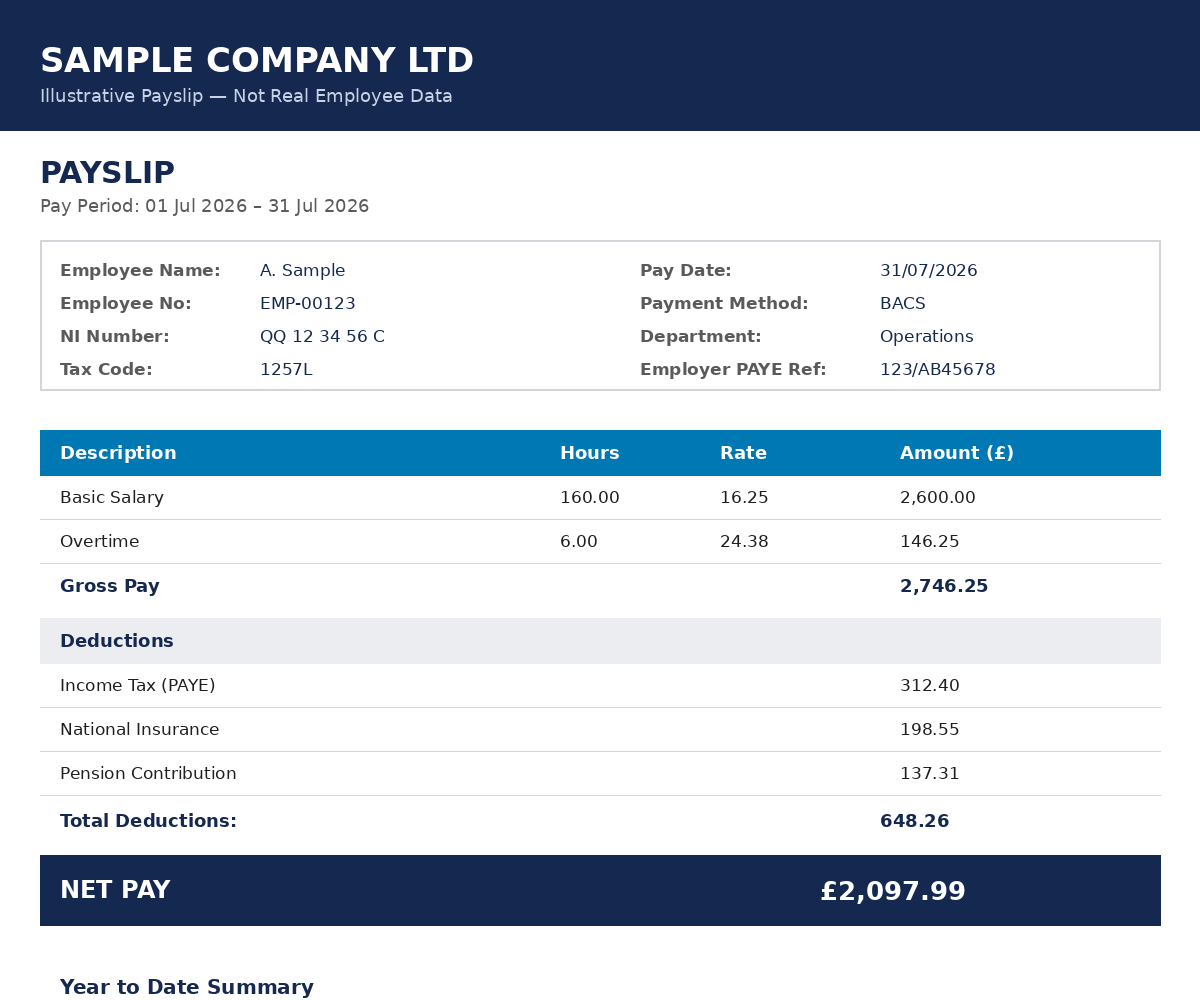
Under UK law, every itemised payslip should show:
- Gross pay (before deductions)
- Net pay (take-home amount)
- Amount and reason for each deduction (tax, National Insurance, pension, etc.)
- Number of hours worked, if pay varies by hours
- Employee name, National Insurance number, and tax code
- Pay period and pay date
Common Reasons People End Up Without a Copy
| Cause | How It Usually Happens |
|---|---|
| Paper payslips misplaced | Thrown away, lost in a house move, or never filed |
| Deleted emails | Payslip email deleted or lost in spam/junk folders |
| Changed jobs or employer closed | No more access to the old payroll portal |
| Switched devices or lost a laptop/phone | Saved PDFs were never backed up |
| Forgotten portal login | Can't access the self-service system to download copies |
What To Do If You Have Lost Your Payslips (Step-by-Step)
This is the question most people are really asking: "I've misplaced them — what now?" Here's the tactical process to work through.
Step 1: Contact Your Employer or HR/Payroll Department
This is almost always the fastest fix. Under standard UK payroll procedures, HR can re-generate duplicate payslips from systems like Sage, ADP, or Xero in minutes.
- Email HR or payroll directly, naming the exact pay periods missing.
- Ask if you can re-enable your portal access to download stored PDFs directly.
- Expert Tip: Employers cannot legally charge you fees to provide copies of personal data under UK Data Protection / GDPR law. If payroll resists, cite a Subject Access Request (SAR) for your wage statements.
Step 2: Check Your Online Payroll Portal or Banking App
Many UK employers use digital payroll providers, so a copy may still exist online even if you've lost the paper or email version. It's also worth checking your bank statements to confirm payment dates and amounts while you wait for a reissued copy.
How Employers Should Handle Requests for Lost Payslips
Employers get these requests often, and having a clear process avoids repeated admin. This section answers a common "People Also Ask" query: are employers required to reissue a missing payslip?
Legal Obligations for Employers
UK employees have a statutory right to an itemised payslip on or before each payday. While the law focuses on providing the original payslip rather than replacing a missing one specifically, most employers reissue copies as standard good practice and to support staff with things like mortgage or visa applications.
How Long Employers Must Keep Payslip Records
Employers are required by HMRC to retain payroll records for a minimum of three years from the end of the tax year they relate to (though many hold them for 6 years to satisfy statutory limitation periods). This means older payslips can usually still be reissued on request, even after an employee has left the company.
YMYL Disclaimer: This article is for informational purposes only and does not constitute professional tax or financial advice. Content reviewed by: Joyce Kim, CTA Chartered Tax Adviser — last updated 16 August 2026. Please consult a qualified tax adviser for your specific situation before making decisions based on this content.
What If You Can't Get Payslips From Your Employer?
Sometimes the usual route isn't available — the company has closed, gone into administration, or you simply can't get a reply. If you're stuck with lost payslips and no working contact, you have two secondary recovery tracks:
Track A: The Company Is Insolvent / Closed Down
If your former employer went bust, payroll records pass to the appointed Insolvency Practitioner (IP). You can search The Gazette or Companies House Service online to locate the appointed liquidator or administrator. Contact them directly with your National Insurance number; they can issue official confirmation of earnings or extract historic pay records for mortgage lenders.
Track B: Using Your HMRC Personal Tax Account
Your HMRC Personal Tax Account lets you view your employment history and income details reported by employers under Real Time Information (RTI). While this won't replicate a payslip line-for-line (it omits specific hours or voluntary deductions), it is official state proof of gross earnings and tax paid.
Using P60s and P45s as Alternatives
A P60 (issued each April) or P45 (issued when you leave a job) can stand in for a missing payslip in many situations, since both are official HMRC-recognised documents summarising your pay and tax. You can find guidance on both, along with how to request a replacement, on the GOV.UK page on P45, P60 and other employment forms.
Replacing Lost Payslips for Mortgage Applications
Mortgage underwriters are notorious for refusing applications without 3–6 months of sequential payslips. If you have lost your payslips right before submitting an offer, take this 3-part fallback approach:
- Reconciled Bank Statements: Print official bank statements showing exact net wage deposits matching your HMRC tax records.
- Employer Verification Letter: Request a written statement on company letterhead confirming your job title, base salary, start date, and gross-to-net pay figures for the missing months.
- P60 Backup for Variable Income: If you receive fluctuating commission or overtime that missing payslips would normally verify, present your latest P60 alongside an official letter from payroll breaking down your recent overtime averages.
Illustrative Example: What a Replacement Payslip Should Look Like
When you request a reissued copy, it should still contain all the standard fields — gross pay, deductions, and net pay — just like the original. Below is a fictional, illustrative sample showing that layout, useful as a reference when checking your own reissued payslip for missing information.
Quick Reference: Where To Get Replacement Documents
| Document Needed | Where to Get It | Typical Timeframe |
|---|---|---|
| Reissued payslip copy | Employer's HR/payroll team or self-service portal | 1–5 working days |
| Income record / employment history | HMRC Personal Tax Account | Instant, once logged in |
| P60 replacement | Current employer | Varies — request directly |
| P45 replacement | Former employer (or HMRC record as a backup) | Varies — request directly |
How to Avoid Dealing With Lost Payslips Again
Switch to Digital Payslips and Back Them Up
- Ask payroll to switch you to digital/emailed payslips if you're still on paper
- Save each PDF to a labelled cloud folder (e.g. "Payslips 2026") as soon as it arrives
- Set a recurring monthly reminder to download and file your payslip
Use Your Employer's Self-Service Portal
Most modern payroll systems keep a rolling history of payslips online. Bookmark the login page and keep your credentials saved securely so a forgotten password never turns into another round of lost payslips.
Quick answer: The fastest way to deal with lost payslips is usually your employer's payroll portal or HR team. If that's not possible — for example, the company has closed — HMRC can supply your employment and income history instead. Also explore our Lost Payslips Blog Post for additional options.
Frequently Asked Questions
What should I do if I have lost payslips from my current job?
Contact your employer's HR or payroll department first. Most UK employers can reissue lost payslips as a PDF or paper copy within a few working days, especially where a digital payroll system is in use.
Can HMRC give me copies of my lost payslips?
No — HMRC does not hold or issue copies of payslips. However, it can provide your income record and employment history through your Personal Tax Account, which is useful evidence when you have misplaced your own copies and need proof of earnings.
How long do UK employers have to keep payslip records?
Employers are generally expected to keep payroll records for at least three years from the end of the relevant tax year — meaning older payslips can often still be reissued even for past pay periods.
What can I use instead of my lost payslips for a mortgage or loan application?
A P60, P45, an employer reference letter, or your HMRC income record can usually be accepted as alternative proof of income if your payslips are missing.
Is my employer legally required to replace my lost payslips?
There's no single law forcing employers to reissue a duplicate copy specifically, but employees have a statutory right to an itemised payslip each pay period, so most employers provide duplicates on request.
How can I stop losing payslips in the future?
Switch to digital payslips, save each PDF to cloud storage as it arrives, and check your employer's self-service payroll portal regularly so you always have a backup copy.
Note: This post complements our separate article covering general payslip recovery. For broader options, read our comprehensive Get My Payslips guide instead.