
UK Payroll Guide · Employees & Employers
How to Replace Lost UK Payslips: A Practical Guide 2026 for Employees and Employers
Missing payslips have a habit of turning up exactly when you need them most — halfway through a mortgage application, a new tenancy, or a visa form. If that's where you are, take a breath: sorting out replacement payslips is usually far simpler than it feels in the moment. This guide walks through exactly who to ask first, what HMRC can and can't do for you, how long employers actually have to keep your pay records, and which documents work as a stand-in when payslips themselves just aren't available in time.
Note: If you urgently need your Payslips, P60, or P45 and cannot wait for standard replacement requests through your employer or HMRC, A2Z Payroll offers accelerated document retrieval services. Visit: A2Z Payroll to request your documents — within 2 hours, A2Z Payroll has over 20 years' experience, in providing genuine payroll documentation.
- Understanding payslips
- Get replacement payslips from your employer
- The legal side for employers
- Realistic timelines
- HMRC's role in replacement payslips
- Other proof of income
- How long to keep payslips
- Mistakes that delay replacement payslips
- FAQs
Understanding Payslips, and Why Losing One Is a Bigger Deal Than It Seems
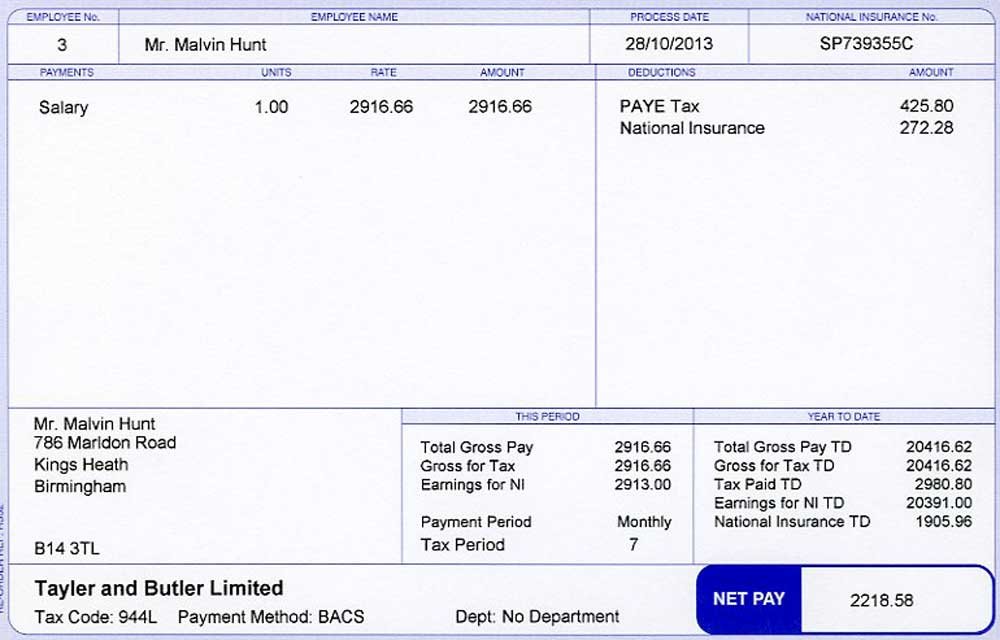
Payslips are not just a courtesy document — they're statutory itemised pay statements. Under Section 8 of the Employment Rights Act 1996, an employer must hand them to every employee and worker on or before payday, and the same protection applies whether they arrive on paper or land in an inbox. For the government's own rundown of what has to be on them, see the official Payslips Guidance on GOV.UK. That protection is exactly why lost or misplaced replacement payslips are rarely a dead end.
The Minimum Information Payslips Must Always Show
This is the baseline genuine replacement payslips should always match, whether they're originals or reissued copies.
| Field | Always required? | Detail |
|---|---|---|
| Gross earnings | Yes | Full pay before anything is taken off |
| Net earnings | Yes | What actually lands in the bank account |
| Variable deductions | Yes, itemised | Tax, National Insurance, student loan, etc. |
| Fixed deductions | Can be a single total | Only if a separate written explanation exists |
| Hours paid | Where pay depends on hours | Zero-hours, overtime, variable shift patterns |
How People Typically End Up Needing Replacement Payslips
- A phone upgrade or laptop reset wipes out saved digital copies
- Portal access disappears the moment employment ends
- A mortgage broker asks for several months of proof of income at once
- A letting agent or right-to-rent check needs recent earnings evidence
- The employer switches payroll providers and old records don't carry over cleanly
- A visa or immigration application requires a documented earnings history
- Multiple replacement payslips are often requested together for a full mortgage income assessment
Step One: Ask Your Employer for Replacement Payslips
Before looking anywhere else, go straight to the source. Employers hold the original records, and since they're required to retain them for a set period, this route is almost always the quickest.
If You're Still on the Payroll
Most replacement payslips are issued through one of these simple steps:
- Check whether an existing payroll app or portal already has them available to download.
- If not, email payroll or HR and name the exact pay date(s) you're missing.
- Ask specifically for replacement payslips rather than a general "proof of pay" letter, since some lenders want the itemised format.
- Give it a few working days, especially if the request covers several months at once.
- Request digital copies going forward so future replacement payslips are one click away.
Already Left the Job? Here's What Changes
Your former employer's payroll team can still help. UK employers must hold onto payroll records for a minimum of three years after the tax year they relate to, so anything from the last few years should still be retrievable. If the business has since closed down entirely, skip ahead to the HMRC section below — that's your fallback route. Recent replacement payslips are usually still retrievable even a year or two after you've moved on.
(Note: This post complements our separate article covering Replacement P60 scenarios. If you're looking for Replacement P60 guidance, see our comprehensive Replacement P60 guide instead.)
The Legal Side: What UK Employers Are Required to Do
There isn't a standalone law that spells out "you must reissue lost payslips," but the surrounding record-keeping and pay-statement duties make it a near-certainty that employers can, and generally should, help. Understanding these duties makes it clear why replacement payslips are normally within reach.
Core Obligations Employers Can't Skip
- Itemised pay statements are due at or before every payday (Employment Rights Act 1996, s.8).
- Since 6 April 2019, this right applies to every worker, not just employees on permanent contracts.
- Payroll records must be kept for a minimum of three years from the end of the relevant tax year.
- Digital-only payslips are lawful, provided workers can genuinely access and retain them.
- Even nil-pay periods, such as unpaid leave, should still generate payslips showing £0.
- Reissuing replacement payslips on reasonable request is standard good practice, even though no single clause names this directly.
What Happens When an Employer Won't Cooperate
Outright refusal is unusual — most hold-ups are down to a slow process rather than a deliberate decision to withhold anything. Still, if an employer genuinely won't engage, the next step is a written grievance, and beyond that, a claim to an employment tribunal under Section 11 of the same Act. A tribunal can order any un-itemised deductions to be repaid, which is a strong incentive for employers to keep their house in order. Putting a request in writing from the outset, even briefly, gives you something to point back to if requests for replacement payslips have been ignored more than once.
This article explains general UK rules around payslips and is not personal financial, legal, or tax advice. Everyone's situation is different, so speak to HMRC, your employer, or a qualified adviser before acting on anything here.
Reviewed by: Joyce Kim, CTA (Chartered Tax Adviser) • Last updated: 13 September 2026
Realistic Timelines for Getting Replacement Payslips
How long it actually takes depends heavily on who's producing the documents and how far back the request goes, so it pays to plan around a deadline rather than assume everything will land same-day.
How Fast Employers Usually Move
If the pay period falls within the past year and the employer runs modern payroll software, a same-day or next-day turnaround is realistic. Requests reaching further back, or aimed at a smaller employer without dedicated payroll staff, can stretch to a week or more while someone digs through archived files. Replacement payslips covering just a month or two are nearly always quicker to produce than a full year's worth requested at once.
How Fast HMRC Usually Moves
Anything visible through the online Personal Tax Account is available almost instantly once you're logged in. A postal request for a written statement of earnings is a different story — it can take several weeks during busy periods, so it isn't a realistic option if a deadline is only days away.
HMRC's Role: Helpful, But Not a Provider of Payslips
A frequent point of confusion is worth settling early: HMRC has never issued individual payslips and doesn't keep copies of them either. That job belongs to the employer alone, and knowing this upfront saves time when requests for replacement payslips go to the wrong place. What HMRC does hold is the pay and tax information employers report through Real Time Information, and those records can substitute for payslips in plenty of situations.
Your Personal Tax Account as a Stand-In
The Personal Tax Account on GOV.UK shows your recorded pay and tax figures for the current year and several years back, pulled straight from what employers reported. It doesn't look like payslips, but plenty of organisations will take it as supporting evidence when genuine replacement payslips can't be produced fast enough. Registration takes roughly ten minutes and needs your National Insurance number plus some form of ID, after which each employment's history is broken down by tax year.
When It's Worth Calling HMRC Directly
- Your former employer has closed and payroll records can't be traced any other way
- You need figures from years further back than your employer is required to keep
- A formal written statement of earnings is required, rather than an online summary
- Online access to your Personal Tax Account isn't working for some reason
| Documents | Your employer | HMRC |
|---|---|---|
| Replacement payslips | Yes | No |
| Replacement P60s | Usually, as good practice | No — a statement of earnings instead |
| Pay and tax overview | No | Yes, via Personal Tax Account |
| Statement of earnings letter | No | Yes, free, on request |
No Replacement Payslips in Hand? Other Proof of Income That Still Works
What Lenders and Landlords Usually Accept
When replacement payslips can't be produced quickly enough, these alternatives usually do the job:
- Bank statements from the last three to six months showing regular salary payments
- A short reference letter from your employer confirming role, salary, and tenure
- A P60 or P45, or HMRC's own statement of earnings
- An SA302 or accountant's certificate, for anyone self-employed
It's always worth checking with whoever's asking exactly which of these they'll take before assuming replacement payslips are your only route — many will happily work with whichever documents you can produce fastest.
Why You Should Avoid Services That Fabricate Payslips
Services that will fabricate payslips from any numbers you feed them carry real risk. Lenders increasingly cross-reference submitted figures against HMRC's own RTI data, and providing fabricated documents can amount to fraud under the Fraud Act 2006. Stick to documents sourced from genuine payroll records — either your employer's or HMRC's — rather than something built from scratch.
Quick answer: The fastest way to get replacement payslips is usually your employer's payroll portal or HR team. If that's not possible — for example, the company has closed — HMRC can supply your employment and income history instead. Also explore our main Lost Payslips landing page for additional options.
How Long Should You Actually Keep Payslips?
Retention periods also determine how far back replacement payslips can realistically be requested.
Guidance for Employees
How long you personally need to hold onto replacement payslips depends on what you're using them for:
| Reason for keeping them | Suggested minimum |
|---|---|
| General personal records | 12 months |
| Mortgage or tenancy applications | Most recent 3 months on hand |
| Self Assessment tax records | At least 22 months after the tax year |
Rules for Employers
- Payroll records: a minimum of three years from the end of the relevant tax year
- HMRC can occasionally request older records in specific circumstances
- Replacement payslips from outside this three-year window may simply no longer exist
- Digital payroll systems make reissuing replacement payslips far quicker than paper archives
Common Slip-Ups That Slow the Whole Process Down
Most delays trace back to a handful of avoidable habits rather than anything more serious — spotting them early saves a lot of back-and-forth.
On the Employee Side
Contacting the wrong department is the biggest culprit, especially at larger employers where payroll and HR sit apart. A vague request — "send me my old payslips" with no dates attached — also slows everything down, since someone has to chase you for specifics before they can even start. It's also worth checking whether payslips are strictly necessary at all; some lenders are just as happy with a bank statement, which you can usually access instantly yourself. None of this makes replacement payslips impossible to get — it just adds a few extra days.
On the Employer Side
The most common bottleneck is having no defined process for reissuing pay records, so every request turns into an ad-hoc email thread. A close second is storing payroll data somewhere only one person can access — a problem that surfaces the moment that person is on leave or has left the company. Cloud payroll software largely removes both issues, and employers who standardise the process end up issuing replacement payslips in minutes rather than days.
Key Takeaways
- Ask your employer first — it's usually the fastest route and they're legally required to keep the records.
- HMRC can't hand you replacement payslips, but the Personal Tax Account fills in the underlying figures.
- Payroll records only need to be kept for three years, so plan ahead for anything older.
- Bank statements and HMRC's statement of earnings are solid fallbacks whenever replacement payslips aren't available in time.
- Never use a service that fabricates payslips — the legal risk far outweighs the convenience.
With the fundamentals covered, here are quick answers to the questions people ask most about replacement payslips.
Frequently Asked Questions
Do I have a legal right to ask my employer for old payslips?
Yes. Section 8 of the Employment Rights Act 1996 gives every employee and worker the right to an itemised pay statement, and employers are required to keep payroll records for at least three years, so a request for recent replacement payslips is well within your rights.
What if HMRC can't trace my old employer's PAYE reference?
You shouldn't need it. A PAYE reference identifies the employer's payroll scheme, not you personally, so it isn't something individuals are expected to supply. HMRC holds pay and tax figures reported by every employer under Real Time Information against your own National Insurance number, so a caseworker can normally trace your record without it, though you'll still go through the usual identity checks before anything is released.
Will a lender or landlord ever reject replacement payslips?
Occasionally. Most lenders and landlords accept genuinely reissued payslips without question, but a small number of organisations insist on the original delivery format or want them cross-checked against a bank statement, so it's worth asking what they'll accept before you request any.
Does HMRC charge a fee for a statement of earnings?
No. A statement of earnings from HMRC is free, whether you view it through your Personal Tax Account or request it by post. The trade-off is speed rather than cost — postal requests can take several weeks to arrive.
What's the fastest way to prove income with no payslips at all?
Recent bank statements showing regular salary deposits are usually the quickest fallback, since you likely already have access to them. A short reference letter from your employer confirming your role and salary is a close second.
Do zero-hours and agency workers get the same rights to payslips?
Yes. Since 6 April 2019, the right to an itemised pay statement covers all workers, not only employees, so zero-hours staff, agency workers, and casual workers are entitled to replacement payslips on the same basis as anyone else.